The Battery-Powered Breach in Lake Park
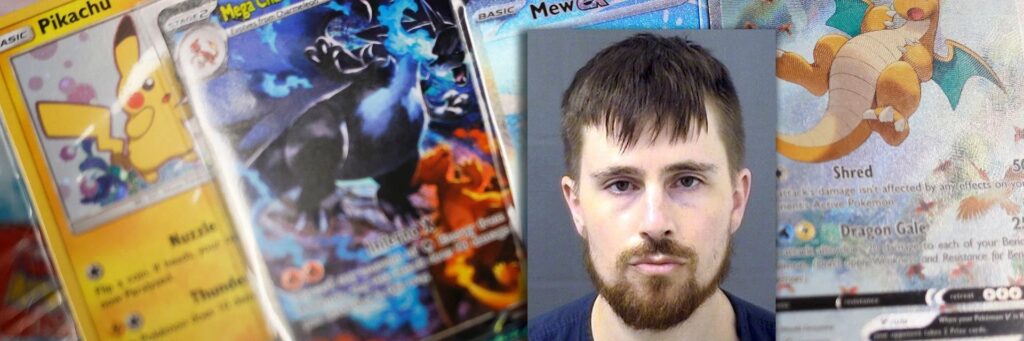
Law enforcement in Lake Park, Florida, responded to an alarming burglary scene that reads like a slapstick comedy script, yet carries severe financial and legal consequences. A suspect deployed a battery-powered chainsaw to forcibly breach a local gaming store, bypassing conventional security measures with sheer destructive force. The target was not a cash register or a safe, but the store’s inventory of Pokémon trading cards. The assailant successfully fled the scene with $12,000 worth of merchandise. As reported by IGN, the Florida man was subsequently arrested following the destructive break-in. The incident highlights a bizarre intersection of organized retail crime and the booming collectibles market.
According to Kotaku, the use of a chainsaw to steal cardboard rectangles underscores a critical reality of the modern trading card economy. These cards hold immense liquid value. The choice of a chainsaw is both destructive and pragmatic. Standard glass doors and display cases are designed to resist blunt force, not rotating chains. The noise generated by a chainsaw presents a significant risk of detection, but the speed of entry minimizes the time spent on the premises, allowing the burglar to execute the heist rapidly before law enforcement can respond.
The St. Louis Card Heist Syndicate
The Florida incident is not an anomaly. It represents a disturbing escalation in a broader crime spree targeting the high-value collectibles market across the United States. In a separate but related trend, St. Louis prosecutors recently charged 18-year-old Zavion McGee with multiple counts of second-degree burglary, stealing, and property damage across four separate burglaries. McGee and his accomplices allegedly made off with more than $10,000 worth of Pokémon cards, alongside jewelry and other valuables. As detailed by FOX2 Now, the St. Louis operation demonstrates a calculated approach to targeting collectibles. The suspects specifically sought out high-value card inventory, treating the merchandise with the same strategic consideration as traditional high-end goods like jewelry. The parallel between the St. Louis syndicate and the Florida chainsaw burglar illustrates a geographic spread in TCG-related crime.
The Pandemic Boom and the Charizard Standard
During the pandemic, the value of Pokémon cards skyrocketed. Influencers, investors, and nostalgic millennials drove prices to unprecedented heights. A first-edition holographic Charizard sold for hundreds of thousands of dollars, setting a benchmark that filtered down to even modern sets. The Charizard standard created an environment where sealed products appreciated in value almost immediately upon release. This appreciation transformed local game stores from niche hobby shops into high-value retail targets.
Criminals recognize this shift. The Reddit community noted the arrests of three men accused of stealing $10,000 worth of Pokémon cards, a figure that once would have seemed absurd for toy trading cards. Now, it is a routine loss report. The Lake Park incident takes this trend to its logical extreme. If a glass case holds $12,000 in liquid assets, the cost-benefit analysis for a burglar justifies the risk of bringing a chainsaw to a retail heist.
The Financial Logic of Targeting Trading Cards
The Pokémon Trading Card Game has experienced a massive resurgence over the past several years. Vintage and modern rare cards command thousands of dollars on the secondary market. A single booster pack from a highly sought-after set can retail for hundreds of dollars at local game stores. For criminals, a display box of booster packs is functionally equivalent to a brick of gold. It is portable, highly liquid, and notoriously difficult for law enforcement to trace compared to serialized electronics like smartphones or laptops.
GameRant highlighted the strange nature of the Florida heist, but the method reveals a calculated approach to defeating commercial security infrastructure. The collectibles market operates largely on trust and paper trails are often obfuscated through multiple layers of peer-to-peer sales. Ungraded modern packs are virtually untraceable. Even graded cards, which carry unique certification numbers from companies like PSA or Beckett, can be cracked out of their protective cases and resold as raw copies, erasing their provenance entirely.
Legal Repercussions and the Felony Threshold
The legal consequences for these burglaries are severe. In both Florida and Missouri, stealing merchandise valued over $10,000 constitutes a major felony. Zavion McGee faces multiple counts of second-degree burglary and property damage, charges that carry significant prison time in Missouri. Similarly, the Florida suspect will face grand theft and burglary charges that could result in years of incarceration. The transition from petty theft to organized retail crime crosses a critical legal threshold. Law enforcement agencies are beginning to coordinate across state lines to address the surge in collectible thefts, treating them with the same severity as jewelry or electronics heists.
The Resale Challenge and Retail Response
The $12,000 loss in Lake Park will likely be absorbed by the store’s insurance, but the psychological toll on local gaming shops is severe. Small business owners are forced to rethink their security postures. Reinforced glass, heavy-duty display locks, and overnight security personnel are becoming necessities rather than luxuries. The cost of doing business in the collectibles space now requires fortifying against organized, tool-wielding burglars.
The resale of stolen Pokémon cards presents its own challenges. While platforms like eBay and TCGplayer attempt to monitor for stolen goods, the sheer volume of daily transactions makes comprehensive policing nearly impossible. Thieves often offload stolen inventory at local card shows, through peer-to-peer marketplaces, or to unsuspecting local vendors for immediate cash. The speed at which stolen cards can be converted into fiat currency makes them an ideal target for opportunistic criminals.
The escalation from simple shoplifting to multi-thousand-dollar chainsaw burglaries reflects the broader economic realities of the collectibles boom. As long as cardboard rectangles maintain their astonishing market valuations, they will continue to attract the attention of sophisticated and desperate criminals alike. The gaming community and local law enforcement must adapt to this new reality, where the contents of a display case are valuable enough to warrant a battery-powered breach.