A Desert of Ruins and Relentless Enemies
The gaming industry rarely produces titles that successfully marry meditative exploration with punishing combat. CALX, the upcoming third-person action hack-and-slash game from developer True Colors, attempts exactly that fusion. Set on the WARP-corrupted planet Syro, the game tasks players with mastering movement through ancient ruins, solving environmental puzzles, and engaging in what the developers term « contemplative combat. » The juxtaposition is striking: a world that invites quiet observation, populated by enemies that demand sharp reflexes and precise execution.
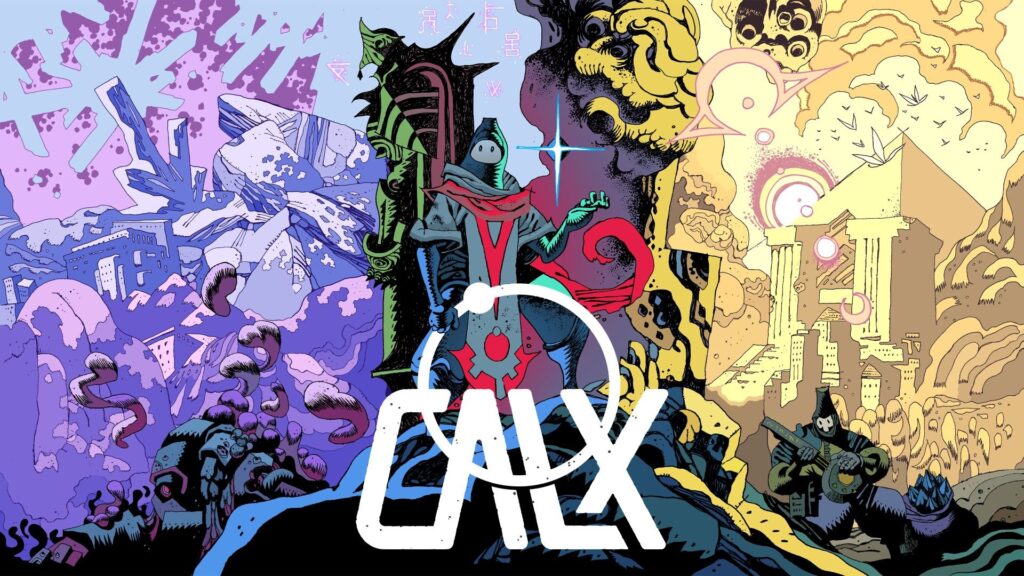
According to the official CALX website, the title is described as an « atmospheric 3D action-adventure » where players explore a world visually devastated by an enigmatic force called WARP. The planet Syro is not merely a backdrop. It is a central mechanical and narrative pillar. Ruins stretch across the landscape, demanding that players learn traversal mechanics before they can even approach the combat system. This design philosophy places movement and environmental literacy on equal footing with weapon mastery.
The Journey Comparison Is Not Accidental
When Kotaku previewed CALX, the publication drew an immediate visual and tonal parallel to thatgamecompany’s 2012 masterpiece, Journey. The comparison is not superficial. Journey remains one of the most evocative digital spaces ever constructed, a game where traversal itself became an emotional act. CALX appears to borrow heavily from that visual language: vast, sweeping desert landscapes, a solitary cloaked figure navigating ancient architecture, and a color palette that shifts between warm amber and deep shadow.
However, CALX diverges sharply from Journey in its core gameplay loop. As the Kotaku preview noted, this is an « action-RPG soulslike » at its mechanical heart. The writer described it as « Hyper Light Sable, » a hybrid reference that captures the game’s identity crisis in the best possible way. It borrows the lonely grandeur of Sable, the top-down intensity of Hyper Light Drifter, and the deliberate, stamina-conscious combat of the Souls genre. The result is a game that looks like a meditation but plays like a crucible.
Contemplative Combat: A Deliberate Oxymoron
The phrase « contemplative combat » appears on the official site and in marketing materials, and it warrants scrutiny. Soulslike games are many things, but contemplative is rarely one of them. The genre thrives on panic, on split-second rolls and parries executed under extreme pressure. True Colors seems aware of this tension. The official gameplay trailer on YouTube showcases combat that is slower and more deliberate than the genre standard. Enemies telegraph attacks with visible wind-ups. The player character moves with a weight that suggests every swing carries consequence.
This pacing aligns with the game’s environmental design. If players must first learn the geography of Syro’s ruins to navigate them, they must similarly learn the rhythm of its hostiles to survive them. Combat encounters in CALX appear to function as extended puzzles rather than reflex checks. Positioning matters more than speed. Pattern recognition supersedes reaction time. The developer’s choice to label this « contemplative » is not marketing spin. It is a mechanical descriptor.
WARP Corruption as Narrative and Mechanics
The concept of WARP corruption serves double duty in CALX. Narratively, it explains the ruined state of Syro and the hostile nature of its inhabitants. Mechanically, it likely governs enemy behavior, environmental hazards, and possibly progression systems. The official site describes the planet as « WARP-corrupted » without fully detailing what that corruption entails. Based on the gameplay trailer, corruption manifests visually as glitched, fractured terrain and enemies that move with unsettling, disjointed animations.
This aesthetic choice ties CALX to a growing subgenre of sci-fi soulslikes that use digital or dimensional instability as both worldbuilding and gameplay modifiers. Games like Returnal and Remnant 2 have explored similar territory. CALX distinguishes itself by grounding its corruption in a world that otherwise feels ancient and organic. The ruins of Syro do not look like digital constructs. They look like fallen temples and eroded monuments, making the WARP corruption feel like an invasion rather than an inherent state.
Where CALX Fits in the Crowded Soulslike Market
The soulslike genre has reached a point of saturation. Every month brings new entries, each vying for attention with increasingly specific hooks. CALX stakes its claim on atmosphere. Where most soulslikes lean into gothic horror or dark fantasy, True Colors opts for sun-bleached science fiction. The visual identity alone separates it from peers like Lies of P or Mortal Shell. The Journey-inspired aesthetic is not merely cosmetic. It signals a different emotional register, one where isolation feels melancholic rather than oppressive.
Community discussions reflect cautious optimism. On forums like Reddit’s r/patientgamers, players consistently express hunger for fantasy worlds that reward exploration without overwhelming them with content bloat. CALX appears designed for that audience. Its emphasis on ruins, puzzles, and deliberate pacing suggests a world meant to be inhabited rather than conquered.
Development Status and Availability
True Colors has confirmed that CALX is available to wishlist on Steam. The game does not yet have a firm release date. The gameplay trailer represents the most substantial public showing to date, offering several minutes of uninterrupted footage covering traversal, puzzle solving, and combat encounters. The trailer confirms a third-person perspective, which aligns with the game’s emphasis on spatial awareness and environmental navigation.
The developer has not announced console versions, nor has it detailed the full scope of the RPG progression system. Questions about skill trees, weapon variety, and build customization remain unanswered. What is clear is that True Colors is positioning CALX as a title that prioritizes mood and moment-to-moment gameplay over sprawling systems. For players exhausted by soulslikes that measure their value in boss counts and skill point spreadsheets, that restraint may be the most compelling pitch of all.
The gaming market does not lack for soulslikes. It lacks for soulslikes that understand why Journey made people cry. CALX might not achieve that emotional peak, but its willingness to try places it in a category nearly alone.