A 25-Year Legacy of Unrelenting Difficulty
The original Gothic landed on PC screens in 2001, establishing a dark-fantasy universe where every mistake was punished severely and survival was a hard-earned privilege. Over two decades later, the gaming landscape has shifted dramatically toward accessibility, waypoint markers, and forgiving combat systems. The upcoming Gothic 1 Remake, however, refuses to adapt to modern comfort. According to a recent Polygon preview, the remake remains one of the most challenging role-playing games ever created, preserving the uniquely brutal experience that defined the 2001 cult classic.
Previewers have consistently highlighted the game’s unapologetic commitment to its hardcore roots. The title does not simply remaster the old assets; it rebuilds the brutal world from the ground up while insisting that players earn every inch of progress. This design philosophy stands in stark contrast to the trajectory of mainstream role-playing games, which frequently prioritize frictionless experiences over demanding gameplay loops.
The Deliberate Eradication of Modern Conveniences
A significant component of the remake’s punishing nature lies in its outright rejection of modern quality-of-life features. Community discussions and early previews reveal a game that actively withields information from the player. As noted in a Gothic 1 Remake Facebook group post, modern RPG fans are in for a shock: the game provides no map by default. Players must locate a map within the game world, and even then, the cartographic aid is incomplete. This forces a level of environmental literacy that has largely vanished from the genre, requiring players to memorize landmarks, navigate by the position of the sun, and learn the perilous routes between camps through trial and fatal error.
The lack of hand-holding extends beyond navigation. The game demands that players pay close attention to dialogue, environmental clues, and the behaviors of the non-player characters inhabiting the mining colony. Missing a crucial piece of information from a conversation can lead to wandering into zones populated by enemies that outlevel the player by a significant margin, resulting in swift and unceremonious defeat.
Rebuilding the Mining Colony With Modern Technology
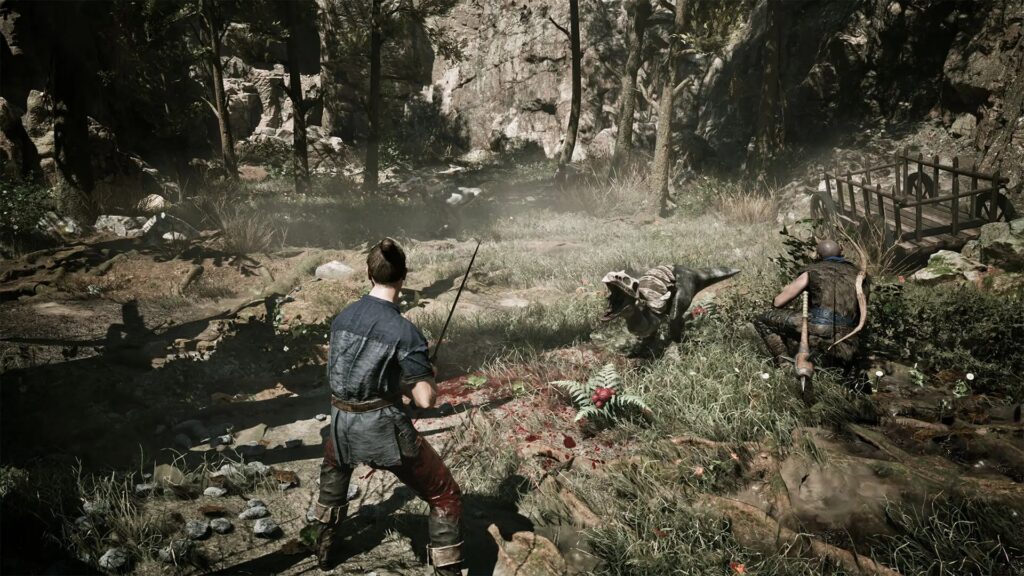
Despite its adherence to old-school design principles, the Gothic 1 Remake is far from a dated visual experience. Developer Alkimia Interactive has leveraged modern technology to reimagining the legendary 2001 title. As highlighted by the pre-order trailer announcement, the project functions as a modern open-world action RPG, updating the technology, visuals, and gameplay systems to meet contemporary standards of graphical fidelity and animation quality.
This creates a fascinating dissonance. The game looks like a premium 2026 release, but it plays with the rough, uncompromising edges of a turn-of-the-millennium European RPG. As observed in a ResetEra hype check thread, the remake might be a far more polished-up rendition of the classic, but it wears its old-school friction like a snug glove. The visual overhaul makes the colony feel more tangible and dangerous, amplifying the tension of exploration rather than alleviating it.
Why Unrestricted Exploration Demands Brutal Combat
The core loop of Gothic has always revolved around the tension between unrestricted exploration and the brutal realities of the world’s power dynamics. A recent TheGamer preview emphasizes that the remake remains faithful to the original experience by preserving its distinctive sense of unrestricted exploration and satisfying progression. The game does not gate the player behind arbitrary level walls or unscalable barriers. If a player wishes to wander into the most dangerous territory immediately, the game allows it. The consequence is almost certain death, but the freedom exists nonetheless.
This freedom is precisely why the combat must be punishing. If combat were forgiving, exploration would lose its tension. Every encounter with a scavenger or a shadow beast carries weight because the penalty for failure is severe. The progression system reinforces this dynamic. When a player finally overcomes a hurdle that has blocked them for hours, the sense of mastery is profound. The remake captures this specific emotional arc, ensuring that power feels earned rather than granted.
Upgrading the Dark-Fantasy RPG Classic
While the foundational gameplay retains its abrasive texture, the developers have identified specific areas where the original game needed substantial upgrades. An IGN preview provided an exclusive look at a new questline added for the remake, shedding light on what the development team wanted to improve. The additions aim to expand the narrative depth and provide veteran players with unexpected content, preventing the experience from feeling like a simple visual reskin.
The inclusion of new questlines indicates a careful balancing act. The developers must expand the game to justify its existence as a full-priced modern release, yet any addition risks disrupting the delicate ecosystem of the original design. By focusing on narrative expansions rather than gameplay simplifications, Alkimia Interactive appears committed to augmenting the world without diluting its notorious difficulty.
The gaming industry’s current landscape, dominated by map markers and auto-saving, makes the Gothic 1 Remake an anomaly. By refusing to compromise on its core friction, the remake serves as a stark reminder of how far the genre has shifted and what has been lost in the pursuit of mass appeal. When it launches, it will offer a pure, unfiltered test of player patience and skill, exactly as it did 25 years ago.